
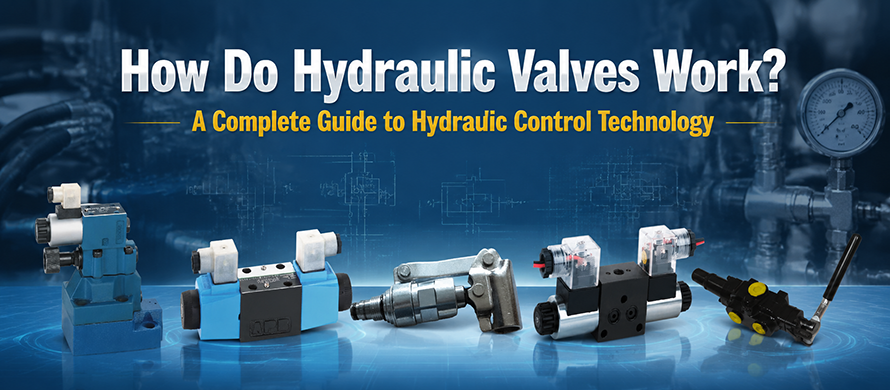
Hydraulic systems play an essential role in modern industrial equipment, providing powerful and precise motion control for a wide range of machines. At the heart of these systems, hydraulic valves act as critical control components that regulate fluid pressure, flow rate, and movement direction.
As a professional hydraulic valve manufacturer, Bstind Hydraulic Valve focuses on designing and producing reliable hydraulic control solutions for various industrial applications. Understanding how hydraulic valves operate helps engineers select the right valve and optimize system performance.
In this article, we will explain the basic working principles, key components, and common types of hydraulic valves.
What Is a Hydraulic Valve?
A hydraulic valve is a mechanical device used in hydraulic systems to manage the movement of pressurized hydraulic fluid. By controlling the flow path of oil inside the system, the valve determines how hydraulic actuators such as cylinders and motors operate.
Unlike simple mechanical switches, hydraulic valves provide accurate control over:
- Fluid direction
- Operating pressure
- Flow speed
- Machine movement
Because of their ability to control high-pressure hydraulic energy efficiently, hydraulic valves are widely used in industrial machinery, mobile equipment, and automation systems.
How Does a Hydraulic Valve Operate?
The working principle of a hydraulic valve is based on controlling the movement of hydraulic oil through precisely designed internal passages.
When pressurized hydraulic fluid enters the valve, the internal control element moves to adjust the opening of different flow channels. Depending on the valve design, this movement can:
- Start or stop fluid flow
- Change oil flow direction
- Reduce or maintain system pressure
- Adjust actuator speed
The valve’s internal components work together to ensure that hydraulic power is delivered exactly where and when it is needed.
Key Components of a Hydraulic Valve
A hydraulic valve consists of several important parts that work together to achieve reliable fluid control.
Valve Body
The valve body is the main housing that contains all internal components and provides the flow passages for hydraulic oil. High-quality materials and precision machining are essential to ensure durability and prevent leakage.
Spool or Control Element
The spool is one of the most important components inside many hydraulic valves. By moving back and forth, it opens or closes specific oil passages and controls the direction and amount of fluid flow.
Spring Mechanism
Springs are commonly used to return the spool or control element to its original position after the control signal is removed.
Actuation System
The actuator provides the force needed to operate the valve. Depending on the application, hydraulic valves may use:
- Manual control
- Mechanical operation
- Hydraulic pilot control
- Electrical solenoid control
Ports and Flow Channels
Ports connect the valve with the hydraulic system. Their design directly affects pressure loss, flow efficiency, and overall system performance.
Common Types of Hydraulic Valves
Hydraulic valves are available in different designs according to their control functions.
Directional Control Valves
Directional control valves regulate the path of hydraulic fluid and determine the movement direction of hydraulic cylinders or motors.
They are commonly used in equipment that requires forward, reverse, or stopping operations.
Pressure Control Valves
Pressure control valves protect hydraulic systems by controlling and maintaining safe operating pressure.
Typical examples include:
- Relief valves
- Reducing valves
- Sequence valves
These valves help prevent excessive pressure that could damage hydraulic components.
Flow Control Valves
Flow control valves regulate the amount of hydraulic fluid passing through the system. By adjusting flow rate, they control actuator speed and allow smoother machine operation.
Where Are Hydraulic Valves Used?
Hydraulic valves are essential components in many industries where accurate power control is required. Common applications include:
- Construction Equipment: Excavators, loaders, cranes, and other heavy machines rely on hydraulic valves for precise movement control.
- Agricultural Machinery: Tractors and harvesting equipment use hydraulic valves to operate lifting systems and hydraulic attachments.
- Industrial Machinery: Manufacturing equipment, presses, and automated production systems depend on hydraulic valves for efficient operation.
- Mobile and Transportation Equipment: Hydraulic control systems are widely used in various mobile machines requiring compact and reliable power control.
Why Choosing a Reliable Hydraulic Valve Manufacturer Matters
The performance of a hydraulic system depends greatly on the quality of its control components. A well-designed hydraulic valve can improve:
- System efficiency
- Operating reliability
- Machine response speed
- Service life
At Bstind Hydraulic Valve, we are committed to providing high-quality hydraulic valve solutions with precise manufacturing processes and strict quality control.
Our goal is to help customers achieve stable and efficient hydraulic system performance across different industries.
Conclusion
Hydraulic valves are fundamental components that control how hydraulic systems generate and transfer power. By regulating pressure, flow, and direction, they enable machines to operate safely, smoothly, and efficiently.
Understanding the basic operation of hydraulic valves helps users choose the right products and improve the performance of hydraulic equipment.
As an experienced hydraulic valve manufacturer, Bstind Hydraulic Valve continues to develop reliable hydraulic control solutions for global industrial applications.